কালী মাতা: তমসানাশিনী জননী
Kali Mata: The Dark Mother
The fierce protector and compassionate mother of the universe
The Origin & Mythology
উৎপত্তি ও পৌরাণিক কাহিনী
Born from Durga's Fury
According to the Devi Mahatmyam, when the great demons Chanda and Munda attacked Goddess Durga during her battle, the goddess grew so furious that her face turned dark as ink. From her furrowed brow emerged Kali — a terrifying figure with dark blue skin, wild dishevelled hair, a garland of skulls around her neck, and a skirt of severed arms. She leapt onto the battlefield with a fearsome roar, devouring the demon armies and slaying Chanda and Munda, earning the name Chamunda.
The Destroyer of Evil
Kali represents the most fierce aspect of the divine feminine — Shakti in her most raw and unbridled form. She is the destroyer of ego, ignorance, and evil. Her dark complexion symbolises the infinite void from which all creation emerges and into which it dissolves. She is time itself (her name derives from "Kala", meaning time), the force that consumes everything and reminds us that nothing in this material world is permanent.
The Sacred Symbolism
Every aspect of Kali's fearsome appearance carries profound spiritual meaning. Her garland of fifty skulls represents the fifty letters of the Sanskrit alphabet — she is the mother of language and knowledge. Her protruding tongue symbolises her consuming nature and also her embarrassment at stepping on Lord Shiva. Her four arms represent the complete cycle of creation and destruction: one hand holds a sword (the destroyer of false consciousness), another carries a severed head (the ego), while the other two hands bless her devotees and dispel fear.
Kali and Shiva
One of the most iconic images in Hindu mythology is Kali standing atop a reclining Shiva. After destroying the demons, Kali's bloodlust could not be contained and she began her dance of destruction, threatening to annihilate the entire cosmos. To stop her, Shiva lay down beneath her feet. When Kali stepped on her husband, she was struck with shame and thrust out her tongue in surprise. This image teaches us that Shakti (energy) without Shiva (consciousness) becomes destructive, and Shiva without Shakti is inert — they are inseparable and interdependent.
The Compassionate Mother
Beneath her fearsome exterior, Kali is the most loving and protective of all mothers. She destroys only that which threatens her children — evil, ignorance, and suffering. Devotees of Kali, particularly in Bengal, relate to her not with fear but with the intimate love of a child for their mother. The great saint Ramakrishna Paramahansa worshipped Kali as his divine mother at the Dakshineswar temple, experiencing her as a boundlessly compassionate presence. To Bengalis, she is simply "Ma" — the Mother who fiercely protects and tenderly loves.
দুর্গার ক্রোধ থেকে জন্ম
দেবীমাহাত্ম্য অনুসারে, যখন মহাদানব চণ্ড ও মুণ্ড দেবী দুর্গাকে আক্রমণ করেছিল, তখন দেবী এতটাই ক্রুদ্ধ হয়েছিলেন যে তাঁর মুখমণ্ডল কালির মতো কৃষ্ণবর্ণ হয়ে গেল। তাঁর কুঞ্চিত ভ্রু থেকে আবির্ভূত হলেন কালী — গাঢ় নীল বর্ণের এক ভয়ংকরী মূর্তি, এলোমেলো উন্মুক্ত কেশ, গলায় মুণ্ডমালা এবং কাটা বাহুর তৈরি বসন। তিনি ভীষণ গর্জন করে রণভূমিতে ঝাঁপিয়ে পড়লেন, দানব সেনাদের গ্রাস করলেন এবং চণ্ড ও মুণ্ডকে বধ করলেন, যার ফলে তিনি চামুণ্ডা নামে পরিচিত হলেন।
অশুভের বিনাশকারিণী
কালী দিব্য নারীশক্তির সবচেয়ে উগ্র রূপের প্রতিনিধি — সবচেয়ে অকৃত্রিম ও অদম্য রূপে শক্তি। তিনি অহংকার, অজ্ঞানতা ও অশুভের বিনাশকারিণী। তাঁর কৃষ্ণ বর্ণ সেই অনন্ত শূন্যতার প্রতীক যেখান থেকে সমস্ত সৃষ্টি উদ্ভূত হয় এবং যেখানে সব কিছু বিলীন হয়। তিনি স্বয়ং কাল (তাঁর নাম "কাল" থেকে এসেছে, যার অর্থ সময়), সেই শক্তি যা সব কিছু গ্রাস করে এবং আমাদের মনে করিয়ে দেয় যে এই জড় জগতে কিছুই স্থায়ী নয়।
পবিত্র প্রতীকবাদ
কালীর ভয়ংকর রূপের প্রতিটি দিক গভীর আধ্যাত্মিক অর্থ বহন করে। তাঁর পঞ্চাশটি মুণ্ডের মালা সংস্কৃত বর্ণমালার পঞ্চাশটি অক্ষরের প্রতীক — তিনি ভাষা ও জ্ঞানের জননী। তাঁর প্রলম্বিত জিহ্বা তাঁর গ্রাসকারী প্রকৃতির এবং শিবের উপর পা দেওয়ার লজ্জার প্রতীক। তাঁর চার বাহু সৃষ্টি ও ধ্বংসের সম্পূর্ণ চক্রের প্রতিনিধিত্ব করে: এক হাতে খড়্গ (মিথ্যা চেতনার বিনাশকারী), অন্য হাতে ছিন্ন মস্তক (অহংকার), এবং বাকি দুই হাত ভক্তদের আশীর্বাদ ও অভয় প্রদান করে।
কালী ও শিব
হিন্দু পুরাণের সবচেয়ে আইকনিক চিত্রগুলির মধ্যে একটি হল শায়িত শিবের উপর দণ্ডায়মান কালী। দানবদের ধ্বংস করার পর কালীর রক্তপিপাসা নিবৃত্ত হল না এবং তিনি ধ্বংসের তাণ্ডবনৃত্য শুরু করলেন, যা সমগ্র ব্রহ্মাণ্ডকে ধ্বংসের হুমকি দিল। তাঁকে থামাতে শিব তাঁর পায়ের নীচে শুয়ে পড়লেন। কালী যখন স্বামীর উপর পা দিলেন, তিনি লজ্জায় আঘাত পেলেন এবং বিস্ময়ে জিহ্বা বের করলেন। এই চিত্র আমাদের শেখায় যে শক্তি (শক্তি) শিব (চৈতন্য) ছাড়া ধ্বংসাত্মক হয়ে ওঠে, এবং শিব শক্তি ছাড়া নিষ্ক্রিয় — তারা অবিচ্ছেদ্য ও পরস্পরনির্ভর।
করুণাময়ী জননী
তাঁর ভয়ংকর বাহ্যিক রূপের আড়ালে কালী সকল মায়ের মধ্যে সবচেয়ে স্নেহশীলা ও রক্ষাকারিণী। তিনি শুধুমাত্র সেই সব কিছু ধ্বংস করেন যা তাঁর সন্তানদের হুমকি দেয় — অশুভ, অজ্ঞানতা ও দুঃখকষ্ট। কালীর ভক্তরা, বিশেষত বাংলায়, তাঁর সাথে ভয়ে নয় বরং সন্তানের মায়ের প্রতি অন্তরঙ্গ ভালোবাসায় সম্পর্কিত হন। মহান সাধক রামকৃষ্ণ পরমহংস দক্ষিণেশ্বর মন্দিরে কালীকে তাঁর দিব্য মা হিসেবে পূজা করতেন, তাঁকে অসীম করুণাময়ী সত্তা হিসেবে অনুভব করতেন। বাঙালিদের কাছে তিনি কেবল "মা" — যিনি প্রচণ্ডভাবে রক্ষা করেন এবং কোমলভাবে ভালোবাসেন।
Kali Puja in Bengali Culture
বাঙালি সংস্কৃতিতে কালীপূজা
Kali Puja, celebrated on the new moon night of Kartik (October-November), coincides with Deepavali across India but holds a uniquely Bengali character. While the rest of India celebrates with Lakshmi Puja and fireworks, Bengal worships Kali with deep devotion, elaborate night-long rituals, and stunning illuminated pandals.
The festival is observed on the darkest night of the year, symbolising Kali's power to bring light into darkness. Homes and temples are lit with countless oil lamps and candles, representing the triumph of knowledge over ignorance and hope over despair. It is a night of profound spiritual significance and joyous community celebration.
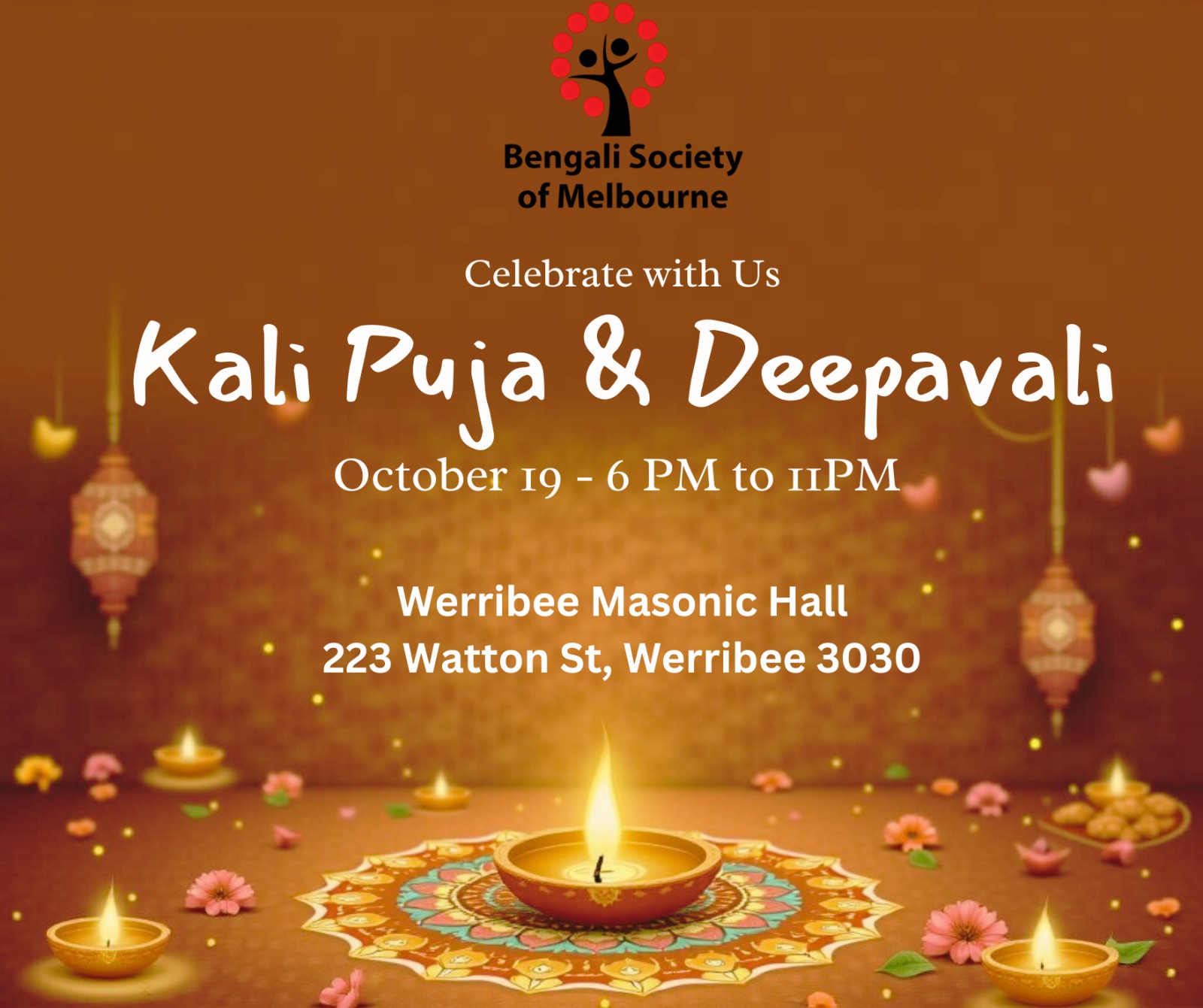
At BSM, our Kali Puja and Deepavali celebration brings the Bengali community together for an evening of traditional puja, cultural performances, and festive togetherness, keeping the spirit of this unique Bengali tradition alive in Melbourne.
কালীপূজা, কার্তিক মাসের অমাবস্যা তিথিতে (অক্টোবর-নভেম্বর) পালিত হয়, যা সারা ভারতে দীপাবলির সাথে মিলে যায় কিন্তু এর একটি স্বতন্ত্র বাঙালি চরিত্র রয়েছে। বাকি ভারত যখন লক্ষ্মীপূজা ও আতশবাজি দিয়ে উদযাপন করে, বাংলা গভীর ভক্তি, বিস্তৃত রাত্রিব্যাপী আচার-অনুষ্ঠান এবং অসাধারণ আলোকসজ্জিত প্যান্ডেলে কালী পূজা করে।
এই উৎসব বছরের সবচেয়ে অন্ধকার রাতে পালিত হয়, যা অন্ধকারে আলো আনার কালীর শক্তির প্রতীক। ঘরবাড়ি ও মন্দির অগণিত প্রদীপ ও মোমবাতিতে আলোকিত করা হয়, যা অজ্ঞানতার উপর জ্ঞানের এবং হতাশার উপর আশার জয়ের প্রতীক। এটি গভীর আধ্যাত্মিক তাৎপর্যের এবং আনন্দময় সামাজিক উদযাপনের রাত।
বিএসএমে আমাদের কালীপূজা ও দীপাবলি উদযাপন বাঙালি সম্প্রদায়কে ঐতিহ্যবাহী পূজা, সাংস্কৃতিক অনুষ্ঠান এবং উৎসবমুখর একতার এক সন্ধ্যায় একত্রিত করে, মেলবোর্নে এই অনন্য বাঙালি ঐতিহ্যের প্রাণশক্তি বজায় রাখে।
Experience Kali Puja with BSM
বিএসএমের সাথে কালীপূজা উপভোগ করুন